
Collaboration is central to the way we work at NCB and a great example of that is our award-winning work with the University of Cambridge.
We’ve worked together on a variety of projects addressing the experiences and mental health needs of children and families with social work involvement, including attention to important issues of suicidal distress and self-harm.
The collaboration has involved NCB facilitating dialogue with policymakers, including the Department for Education and the Ministry of Justice, as well as supporting experts-by-experience to present directly to stakeholders, including the Health Minister, senior officials at HM Treasury, the Director General of the Department for Education, and the Children’s Commissioner for England.
In 2023, we were thrilled that this work was recognised with one of the University of Cambridge’s prestigious Vice Chancellor’s Awards for Research Impact and Engagement.
One major avenue for this collaboration has been the Wellcome Trust-funded Living Assessments project, working alongside teams from Cambridge and the University of Kent and drawing on the experience of disabled children and young people, care leavers and parents of children who have undergone social care assessments.
Over five years, Living Assessments investigated the experiences and impact of health and social care assessments on children and families. Although this project has now come to an end, our work with the University of Cambridge continues.
We asked Dustin Hutchinson, Senior Policy and Public Affairs Manager at NCB, Dr Barry Coughlan, Assistant Professor of Psychology at the National College of Ireland and Visiting Researcher at the University of Cambridge, and Prof Robbie Duschinsky, Professor of Social Science and Health, University of Cambridge, to reflect on one of the last pieces of work enabled by the Living Assessments project, an analysis of data from a study of records and case notes from a large mental health service.
The study used data from over 20,000 young people attending mental health services in a large English NHS Foundation Trust who received a brief clinician-rated risk assessment that included items relating to maltreatment, parental mental health difficulties, substance misuse, self-harm, and extrafamilial violence.


Dustin Hutchinson, NCB:
“The Living Assessments research has led us in many fascinating directions and the study of the linked datasets at an unprecedented scale has produced such a rich depth of evidence-informed insights.
The groundbreaking infrastructure created by these learnings has given us the ability to better understand how the national and regional systems that support children and young people work. That means we’re in much better position to be able to answer the questions that policymakers are asking.
This latest study follows the publication of findings last year, which used a data-driven approach to identify profiles of young people with distinct ‘risk profiles’.
That study considered whether there are certain risks or adverse experiences that interact with each other in different ways on different young people and whether groups of children and young people shared similar profiles.
This differs from the more widely used approach by researchers, which takes a cumulative view on risk and adversity. The cumulative approach assumes each of these adverse experiences has an equal impact on a person’s mental health so the more experiences that are added on top of each other, the greater the chance of a negative outcome, and conversely the less they have, the lower the chance.
The potential downside of the cumulative approach for those working in mental health or social care services is that it “flattens out” the weighting and impact of each adverse experience to make each one equal and, in the process, means vital clues could be missed that might point to a more accurate assessments and support for that young person.
The category-based or ‘typological’ approach is driven by data and while it doesn’t provide the relative statistical simplicity offered by the cumulative approach favoured by researchers, it does more closely match the more nuanced and context-focused approach taken by clinicians.
This latest Living Assessments study road-tests the findings from last year by comparing the typological approach with the cumulative one in predictions of outcomes for children and young people who are assessed by CAMHS.
The conclusions are useful not only for practitioners on the frontline but as further building blocks in our knowledge and experience to share with policymakers.
In particular, they provide further evidence of the need for a dedicated pathway to mental health support for children with social workers.
Children’s social care has been at a tipping point, with spending on crisis services outstripping early intervention.
With elements of the Families First for Children Pathfinder programme now being rolled out nationally, the Children’s Wellbeing and Schools Bill and the NHS 10-year health plan, there is a once-in-a-generation opportunity to further improve the lives of babies, children and young people who experience health and social care intervention in line with Living Assessments’ priorities.
Use of large, linked data sets have huge opportunities for learning. Learning can help inform the implementation of the single unique identifier for all children, currently progressing through Parliament in the Children’s Wellbeing and Schools Bill. Learning from these data sets can also help answer policy makers’ questions about what interventions are effective to support children and families’ development.
We will continue to make sure that children and families’ experiences are heard, and that new policy builds on the legacy of this rich and collaborative programme of work.
If you are interested in the benefits of using data sets for policy development, please get in touch. Further information about the data set we used in this project can be found here.”

Professor Robbie Duschinsky, University of Cambridge:

“All young people attending mental health services in England are subject to at least one risk assessment. These risk assessments often assess a range of possible safety threats to the young person’s wellbeing, including abuse, neglect, substance problems, antisocial behaviour and the risk of suicide.
Our consultations with young people, facilitated by NCB, identified that the experiences of these assessments are not always emotionally neutral. A common question we heard from young people and their families was: “How do these assessments influence the service provision?” Our research aimed to address this question.
Our first piece of research, published last year, established the rates of different risks and adversities in a large mental health service. Drawing on data from over 20,000 young people, the five most common factors identified in risk assessments were: parental mental health (21%), emotional abuse (21%), violence towards others (19%), destructive behaviour (18%), and not attending school (17%).
Interestingly, around 20% of young people who had a risk assessment in mental health services also had past or present social work involvement.
We then applied a statistical approach called latent class analysis to see whether certain groups of young people had shared risk profiles. One benefit of using latent class analysis is that it provides a data-driven person-centred account of risk.
Using this approach, we identified six categories of risk:
- maltreatment and externalising behaviours
- maltreatment but low risk to self and others
- antisocial behaviour
- inadequate caregiver supervision and risk to self and others
- risk to self but not others, and
- mental health needs but low risk.
These profiles provided a data-based way of identifying how services were thinking about risk.”

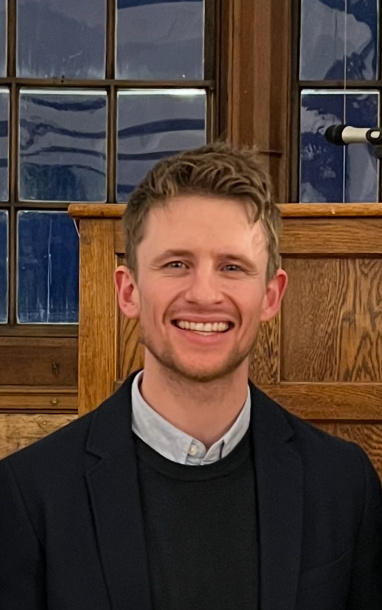
Dr Barry Coughlan, University of Cambridge:
“In our second study, we examined the associations between these six categories or risk profiles and important aspects of service activity, including mental health diagnosis and appointment attendance.
To date, most of the studies on risk and adversity have taken a cumulative approach. This essentially means that different types of adversities (e.g. divorce, abuse, parental mental health) are scored, for example, as either 0 or 1 and then added to create a ‘total adversity score’.
From a statistical point of view, cumulative scores are handy. However, one major drawback is that cumulative models often treat different risks as equally harmful. Still, it’s the dominant model in many areas of psychology, so we also created a cumulative measure of adversity (comparable to the popular ACES measure) and examined the association between this measure of adversity and risk.
One thought-provoking finding was that no matter how it was assessed, risk and adversity were consistently associated with higher rates of conduct disorder. This was also the case for young people whose risk profiles were characterised by risk to themselves and not others. These findings align with other studies which suggest that adversity may play a role in diagnostic practices for young people diagnosed with conduct disorders.
Adversity and risk had a more complicated relationship with diagnoses of developmental disorders (like autism, for example). When examined cumulatively, we documented a robust negative association between adversity and developmental disorders, meaning that rates of developmental disorders went down as adversity increased. One implication of this would be that young people with more adversity are less likely to receive a diagnosis of a developmental disorder.
However, this was not the full story.
When examining risk profiles, we found that the type of adversity seemed to play a key role. For instance, although developmental disorders were considerably less likely in young people with maltreatment and externalising behaviour, they were more likely in young people with antisocial behaviour, and no more or less likely in young people with inadequate caregiver supervision.
Along similar lines, we saw very modest associations between cumulative adversity and attendance. However, when examining risk profiles these trends were amplified.
With this research enabled by the Living Assessments project, there are now a number of frameworks or languages that we can use to talk about risk and the adverse experiences faced by children and young people.
Some of these may be helpful for stimulating thinking about risk specifically, the social context of mental health broadly, and how mental health professionals respond to these risks.”
Barry is the lead author and Robbie and Dustin are co-authors of Typological and cumulative approaches to risk and adversity in Child and Adolescent Mental Health Services (CAMHS): retrospective cohort analysis in South London.
(The original risk profiles study referred to by Robbie can be found here: Risk rates and profiles at intake in child and adolescent mental health services: A cohort and latent class analyses of 21,688 young people in South London - Coughlan - 2024 - JCPP Advances - Wiley Online Library)